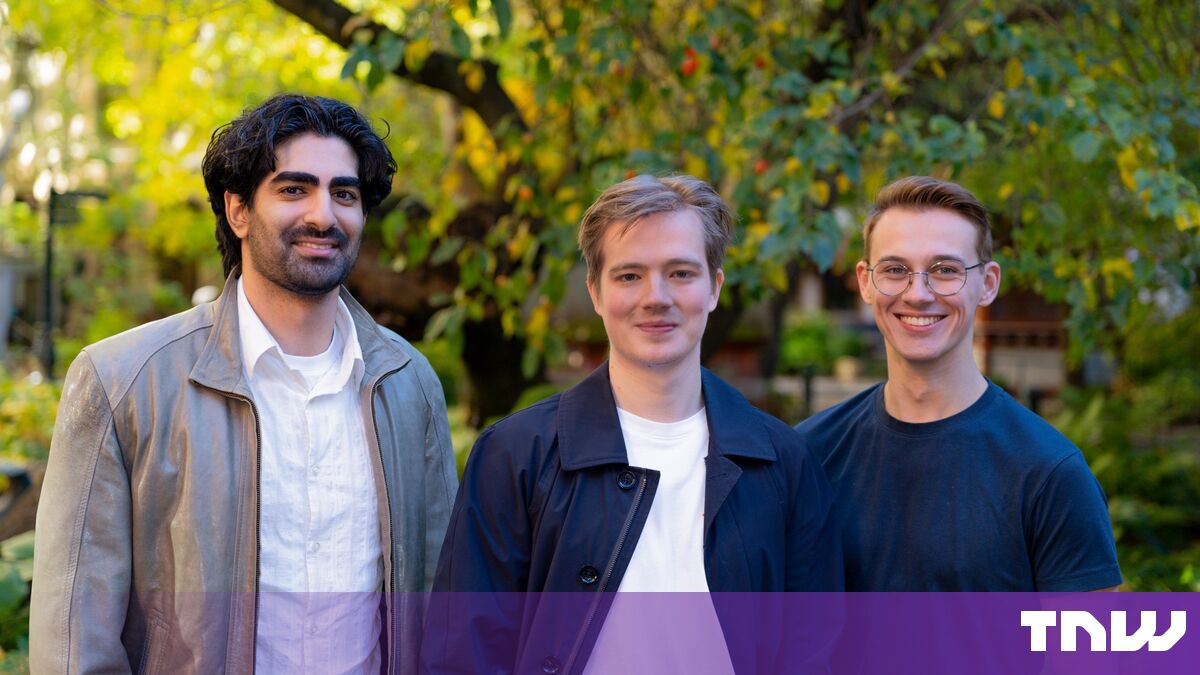
Circuit Mind, the London circuit board design company, announced on 28 October 2026 that it has raised $25 million in total. The money comes from an $18.5 million Series A led by Norwest Venture Partners and a previously unannounced seed round led by Third Prime. Lightscape Partners joined as a new investor, alongside existing backers Third Prime, Differential Ventures and Blackhorn Ventures. Dave Zilberman, a general partner at Norwest, will join the board.
The company also launched the Agentic Verification Engine, which uses a swarm of AI agents to trace connections and buses in a schematic for mismatches with pin tables or operating voltages. Nothing reaches an engineer until the system has critiqued its own findings. Including the new funding, backers have put $33.4 million into the business.
The money will go towards testing and firmware, larger sales, engineering and customer success teams, and a U.S. headquarters. Co-founder and Chief Executive Tomide Adesanmi said electronics design "hasn't changed in 40 years".
Reported by SiliconANGLE, via StrictlyVC, 2026-10-29
Machenta, a London startup founded a year ago, is building an AI model that teaches robots new physical tasks after a single demonstration. The company has raised a $40 million seed round. Creandum and Union Square Ventures co-led the funding.
Brent Council has put scaffolding around an end-of-terrace property on Claremont Road, near Queen's Park station, after cracking reached dangerous levels. Ground-floor tenants have been moved to alternative accommodation. Residents of Claremont Road and Kilburn Lane say damage worsened after a tunnel boring machine passed about 18 metres underground between August 30 and September 13, on the HS2 route between Euston and Old Oak Common. Around a dozen people report new or markedly worse cracks.
HS2 Ltd disputes the cause. A spokesman said monitoring data indicates tunnelling-related ground settlement in the area has been small and in line with expectations, and that the company will compensate where tunnelling has had a material impact on a property. Barbara Want, a Liberal Democrat councillor for a Brent ward, rejects HS2's suggestion that weather is to blame. "The cracks appeared within days of the tunnelling happening," she said. She is pressing the company to accept responsibility.
One homeowner was invited to sign a settlement deed in September 2025. An assessment sent to him on June 23 included a photograph of his building showing no visible damage at that time.
Stockholm-based Strawberry has taken its AI browser out of beta with version 1.0, aimed at workers who do not write code, including those in sales, marketing, recruitment and customer service. The main change is that what one person teaches an assistant, which the company calls a companion, can now be shared across a team. Companions can also run on a schedule or start when a new email or sales lead arrives. "Today the person who is great with Claude keeps all of it on their own laptop," said Charles Maddock, Strawberry's chief executive and co-founder.
Strawberry says companions pause for approval before sending emails, publishing posts or changing records, and that passwords stay in the user's browser. The browser runs on macOS and Windows, with a free plan and paid plans from $20 a month. The 12-person company raised $6 million in October 2025. Its next test is whether assistants trained by one employee can do useful work for a whole team without creating more oversight and maintenance than they save.
Helsing has unveiled Contra, an air defence system controlled by artificial intelligence. It is designed to counter large-scale attacks by drones and missiles. The company launched the system alongside two new interceptors. No further details were available at the time of writing.
Reported by C4Defence, via Scaling Europe Daily, 2026-10-27
Revolut, valued at $115bn and operating in 38 countries, now has no venture capital investors on its board. Chief executive Nik Storonsky told David Senra in a podcast interview that he removed them in every funding round, and that he took losses to do it.
When he started Revolut 12 to 13 years ago, he said, many European investors acted like private equity firms, and founders signed terms that included liquidation preferences, board seats and fewer voting rights. Storonsky, Revolut's chief executive, said quite a few VCs "can be actually dangerous for the company if they have enough power". He argued that boards should be made up of operators who have built businesses, and that investors should hold no voting rights.
Storonsky also started QuantumLight, a venture firm that picks startups with machine learning models rather than human judgement. Its first fund, $250m for Series B rounds, has returned a 56% internal rate of return, he said. A $500m second fund is now investing. QuantumLight is separate from Revolut.
Budget introduces Founders' Relief and widens visa and funding routes
Chancellor John Healey's first Budget introduced Founders' Relief, which sets a 10% capital gains tax rate on up to £10m of lifetime gains for founders of high-growth companies. It starts in April 2027. The lifetime limit on Business Asset Disposal Relief was halved to £500,000. The rules for Founders' Relief are still under consultation.
Lovable has 70 people in London and plans to grow that to 100 by the end of the year. The company has opened its first office in the city, its second engineering, product and design hub after Stockholm. Teams there cover AI research, growth and enterprise engineering, forward-deployed engineering, security, infrastructure and design, alongside go-to-market, marketing, people and finance. The London group includes the team behind Radish AI, which Lovable recently acquired to scale its work on agents and infrastructure.
The UK is Lovable's third-largest market globally by paying active users. At Huel, around 300 employees have built more than 200 internal projects, and Lovable says the company has cut more than £85,000 in annual SaaS spend by replacing off-the-shelf tools. Shahez Shwana, Group Product Manager at Paymentology, said Lovable "is changing how we innovate, collaborate and bring new capabilities to life." Globally, people have created more than 70 million projects on the platform, with more than 1.2 million new projects each week.
Hilda Griffiths, 81, was walking her dog in Regent's Park a little after 7am when a cyclist knocked her unconscious. She died in hospital two months later, in August 2022. It first looked like a rare accident, a pedestrian killed by a cyclist.
Since then, the argument that cyclists endanger pedestrians has gathered pace. Sarah Gayton, speaking as a spokesperson for the National Federation for the Blind, has accused the mayor, Sadiq Khan, of ignoring the safety of blind people and pedestrians in general. Cycling campaigners tend to disagree. Simon Munk of the London Cycling Campaign nonetheless described pedestrians as the "elephant in the room" in conversations about road safety.
The Londoner analysed pedestrian safety data to test whether pedestrians are being overlooked in the mayor's effort to cut deaths and serious injuries on the roads. It reports that one borough is seeing a surge in pedestrian casualties. The borough and the figures are not given in the part of the article available without a subscription.
OpenAI released GPT-6.1 Terra on 26 October, pricing the API at $1 per million input tokens and $5 per million output tokens. The company says that is 50% lower than GPT-5.6 Terra and GPT-6.1 Sol. The model is aimed at computer use, visual reasoning and everyday work such as filling out forms and interpreting technical drawings. It is available now to Plus, Pro, Enterprise and Edu users in ChatGPT Work and Codex, and through the API as gpt-6.1-terra.
The performance figures all come from OpenAI. On Agents' Last Exam, Terra scored 15 percentage points above GPT-5.6 Terra at medium reasoning effort, at about one-third of the cost. OpenAI says it completes tasks more than three times faster than GPT-6 Astra and GPT-6.1 Sol. On its internal benchmark, the low-effort error rate fell from 53.6% to 16.7%. On Terminal-Bench 4.0 at maximum effort it scored 50.3%, against 21.5% for its predecessor. For the most complex coding work, OpenAI still recommends GPT-6.1 Sol or GPT-6 Astra.
Google announced Gemini 4 Carbon on 28 October 2026 and said it is making the model available this week to a subset of cyber defenders. Access will widen gradually to additional trusted partners through its Fairwind Program. Carbon follows Gemini 4 Argon, which launched two weeks earlier. Google says Carbon ranks first on version 5.0 of the Artificial Analysis Intelligence Index, with a score of 59.
Google has not given a date for wider release to developers, businesses and consumers. It says it is still gathering feedback and adjusting guardrails, and is taking part in the US government's voluntary process for pre-release model testing. On external cybersecurity benchmarks, evaluated without guardrails, Carbon scored 88.2% on SEC-bench Pro for finding vulnerabilities, 54.8% on ExploitGym for exploitation and 71.0% on CWE-bench for patching. Google also says the Chrome team found Carbon more than 10 times better than another lab's model at producing high quality patches. Pricing matches Argon at $2 per million input tokens and $10 per million output tokens.
Bequest, a company created in the Founders Factory studio, offers a personalised life insurance policy decision in as little as 15 minutes, against the usual six weeks. It is aimed at the millennial market and also provides free wills. It handles digital inheritance and takes account of the mental wellbeing of everyone involved.
The article's author, who leads fintech and insurtech at Founders Factory, describes a wider move to sell insurance at the point of need. Examples include on-demand car insurance when hiring a car, or cover at the click of a button when renting a scooter, with no lengthy phone conversation. Parity, another studio company, lets gig workers compare financial products and save on insurance. The article says financial institutions have left that group out because they see its income as too unstable. It also argues that creators, around 50 million of whom earn an income, should be able to insure their social media equity against being cancelled.
Incumbents remain in the picture. Most fintechs still rely on traditional banking partners for compliance, practical and scalability reasons, and will for at least the next several years.