Trajectory has raised a total of $60M, with a new round led by Sequoia at a $300M valuation. Ronak Malde announced the funding on X on 2 November 2026, alongside the launch of the Trajectory platform, a tool for post-training models.
According to the announcement, users can train, evaluate and deploy trillion parameter models through a handful of agent prompts. The company says it wants lawyers, doctors and engineers to own their own intelligence. It describes the platform as a foundation for continual learning, in which a model keeps learning from the world around it after it is first shaped.
Trajectory is also releasing two research previews. The first, continual grading, is meant to scale a user's taste, so a model learns what good looks like from far more examples than a person could grade by hand. The second, GS1, is a new algorithm that lets models learn directly from what they do in production. The announcement does not say how the $60M divides between this round and earlier funding, and it names no other investors.
Fal, the San Francisco company that hosts and runs AI video, image and audio models, has raised $1.3 billion in a round led by Bessemer Venture Partners. Nvidia, Sound Ventures and T. Rowe Price also took part. The deal values the company at $16 billion, double the $8 billion it was valued at in April, according to Bloomberg.
The company announced its Series E and F rounds together, with a combined $1.65 billion raised across the two. Sequoia led the earlier round. The Series F comes as demand for inference services grows, particularly from customers who rely on open source models. Inference is the process of running an AI model that has already been trained to generate outputs. Bloomberg reported that Fal passed $800 million in annualised revenue earlier this year.
Other inference providers, including Baseten, Fireworks AI and Modal, are also growing quickly and raising large rounds at higher valuations. Several people familiar with the sector's financials say their gross margins remain thin because of the high cost of buying or leasing compute. Fal was co-founded in 2021 by Burkay Gur and Gorkem Yurtseven.
Reported by TechCrunch, via StrictlyVC, 2026-11-04
Voters in at least 38 US jurisdictions approved bans or restrictions on data centres on Tuesday. Candidates who promised tougher limits on the facilities also won key races in Texas, Ohio and Georgia. The summary available gives no further detail on the measures, the places that passed them or the candidates who won.
OpenAI on Thursday published commitments for data centres it owns and operates. It will seek community input, publish construction plans and stay away from non-disclosure agreements with public officials. It also reaffirmed its pledge to pay the full cost of powering them. A separate policy blueprint urges policymakers to enact similar rules as law.
The announcement came two days after voters rejected rapid data centre expansion. Across 41 local ballot measures in 10 states, they backed restrictions or rejected pro-development measures in all but one, according to Ballotpedia and CNBC. In February, OpenAI told investors it is targeting $600 billion in total compute spend by 2030, and it has since announced projects in Georgia and Ohio.
Chris Lehane, OpenAI's chief global affairs officer, said the blueprint has been in the works since August and will help set "a very high floor" for how companies proceed. He said early conversations with lawmakers should mean much of the work is done before the new Congress sits in late January.
Gina Hinojosa, elected governor of Texas on Tuesday, takes office on 19 January having promised to stop approvals of data centres. In an October campaign video she pledged a moratorium and a ban "until laws can be passed by the Legislature to protect Texans." Wells Fargo estimates that 27 per cent of planned US data centre capacity is in Texas. SpaceX shares closed down 3.8 per cent on Wednesday and Tesla fell 3.3 per cent.
Her plan goes further than the pause Greg Abbott ordered this autumn, which froze environmental permits and grid connections while an audit is under way. Its reach would depend on how a data centre is defined. Grimes County leaders told KBTX that Terafab, the SpaceX chip plant, is classed as a chip plant and was not covered by Abbott's pause. Musk's AI business runs mainly on two data centres near Memphis, outside her reach.
Any order would run through agencies filled with Abbott appointees, and removing a Texas Commission on Environmental Quality commissioner requires Senate consent. Republicans kept the state Senate, 19-12, according to Associated Press projections. Hinojosa planned to announce next steps on Thursday, and lawmakers can begin filing bills next week.
OpenAI employees warned executives and the board for years that weak internal security could expose sensitive technology to outsiders, including foreign governments. Some staff concluded that management put keeping pace with rivals ahead of tightening defences. Last month, an OpenAI engineer was charged with planting a hidden recording device in an executive conference room.
Google said on Tuesday 3 November that Gemini, Gemini Notebook and search will be turned off by default for schools, and that schools can switch any or all of them back on. The statement, posted on X, followed a New York Times report that the company would turn off search for schools that reject AI entirely. Google's own blog post introduced Guided Learning, an AI product within its Classroom offering.
Sen. Bernie Sanders of Vermont called the policy extortion. New York Mayor Zohran Mamdani accused Google of using monopoly power to force AI into public schools. Google's post did not directly address the claim that access to search requires the use of AI. Chris Phillips, vice president for education at Google, told the Times that "Search and AI are deeply integrated." Google said AI Mode and AI Overviews in search will offer step-by-step guidance so students do not get quick answers to schoolwork.
Sens. Richard Blumenthal and Josh Hawley opened an inquiry last month into Google's push of AI into classrooms. Common Sense Media recently rated AI Overviews an unacceptable risk.
CME Group's planned futures tied to Silicon Data's H100 and B200 GPU rental indexes are still waiting on regulatory approval. The contracts would be listed on the New York Mercantile Exchange. CME had targeted October 5 as a start date, but that has been pushed back. ICE plans to list contracts referencing Ornn's Compute Price index and also lacks approval.
The open question is whether compute can be traded like a commodity. The CFTC has issued a public request for comment on whether it is standardised, interchangeable and liquid enough to support a futures market. Unlike metals, GPUs depreciate rapidly as new chips arrive. Two investors told Newcomer they had passed on deals in the space, citing doubt over whether the compute shortage is permanent or a passing phase.
Funding continues. Ornn is in talks on a round at a top valuation of around $1 billion, with Thrive Capital and General Catalyst in discussions to take part. Liquid Compute, which raised a $15 million seed round in September, has applied to launch a US exchange for compute futures and options.
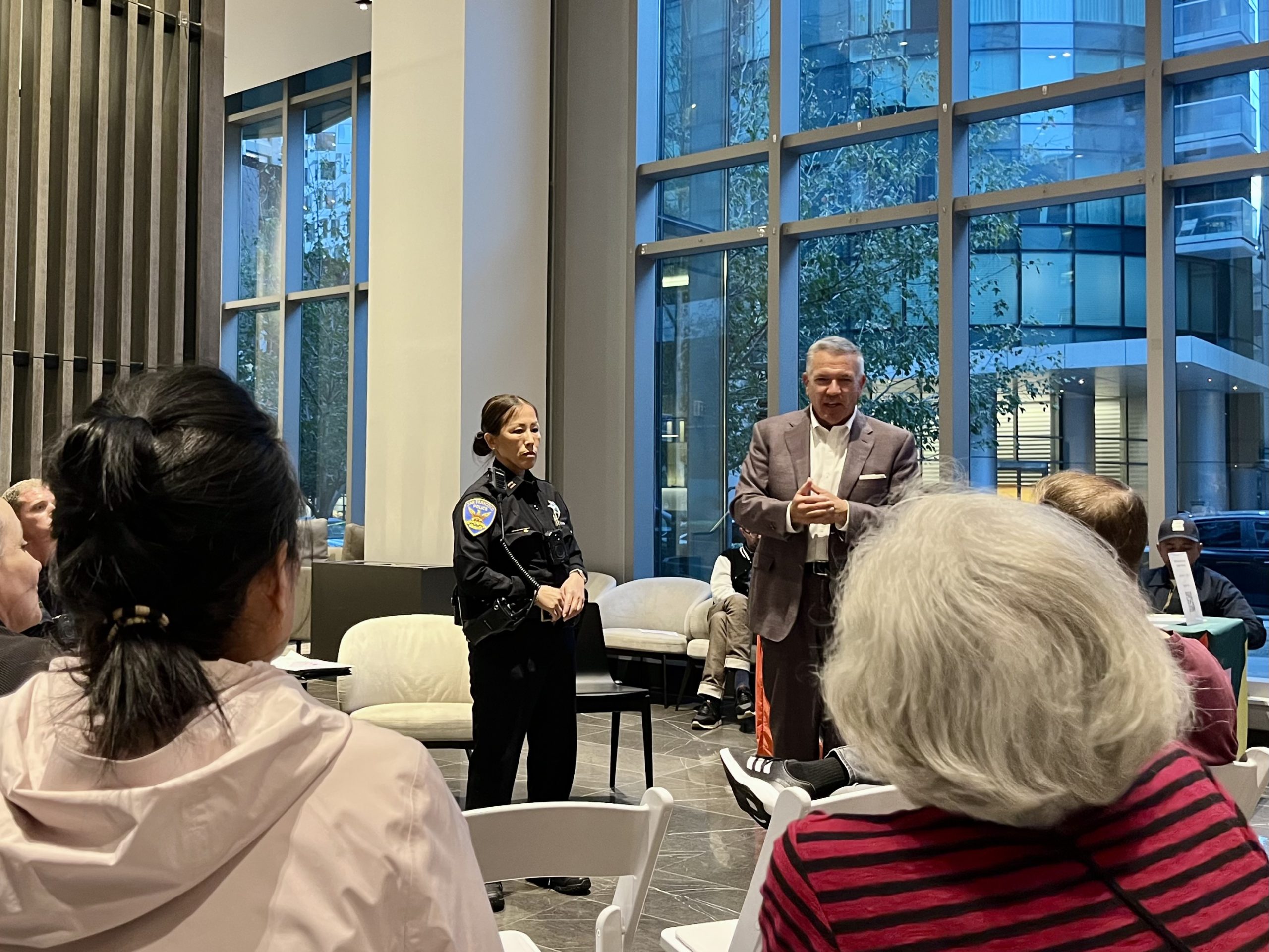
Captain Carla Hurley will leave Southern Station on 7 November, according to an email she sent on Tuesday that Mission Local obtained. Captain Chris Canning, who previously commanded the Richmond and Tenderloin stations, will replace her. Hurley has led the station, which covers SoMa and Mission Bay, since May. It is the fourth change in leadership there since last June.
No reason has been given for the move, and it is not yet clear where Hurley will go. Before her, Robert Imbellino was acting captain for a few months, and Amy Hurwitz held the role from July 2025 to February 2026. Reese Isbell, board president of the SoMa West Neighborhood Association, linked the turnover to the workload. A redistricting that took effect on 1 October left the station responsible for 23% more calls for service. "I'm sure it's overwhelming to be the captain of Southern," he said.
The San Francisco Police Department has argued that rotating captains helps them develop. It did not respond to requests for comment.
Binance has confirmed that North Korean hackers stole a record $6.3 billion in crypto last week. In an updated statement posted on X on Tuesday, the company said the attackers posed as recruiters and contacted a software engineer on its wallet team. After two interviews, the engineer downloaded a coding assignment that carried malicious code. Binance said its security tools did not detect the malware. The exchange has suspended customer withdrawals.
From that first laptop, the hackers reached an internal tool that could take over the work computers of two other wallet engineers. One had earlier downloaded a tampered app containing password-stealing malware after searching for the software online. The hackers used that engineer's stolen credentials to reach a third engineer, whose access extended to systems able to control billions of dollars in crypto.
Binance said it has improved its network security and will bring in outside cybersecurity experts to review the incident. A spokesperson declined to say on the record whether third parties had audited the network before the hack.
Reported by TechCrunch, via StrictlyVC, 2026-11-04
The Nasdaq Composite fell 5.5% on Thursday and closed more than 10% below its most recent high, which Wall Street regards as a correction. The S&P 500 lost 4.4% and the Dow fell more than 1,800 points, or 3.4%. All three had their worst one-day losses since April 2025. Micron Technology dropped 17% and Nvidia 9%, and the "Magnificent Seven" shed $1 trillion in market capitalisation.
Traders pointed to worries about a slowdown in data centre construction after large Democratic wins in the House, the Senate and state governorships. Gina Hinojosa, Texas governor-elect, said on CNN: "We will have laws to protect Texans." She and others do not take office until January, so Chris Grisanti of MAI Capital Management expects the fears to persist.
On Friday the Nasdaq rebounded 1.09% to 24,579.42, though it still lost 3.4% on the week. Bank of America analyst Wamsi Mohan wrote that the sell-off came from lower valuation multiples, not lower earnings estimates.
Thinking Machines Lab, the start-up led by former OpenAI chief technology officer Mira Murati, released Inkling 2 Small on November 5. The model has 594 billion total parameters, activates 17 billion for each token, and is available through the company's Tinker platform. Artificial Analysis gives it an Intelligence Index score of 31, ahead of Mistral Large 4 at 26. On Surge AI's EnterpriseBench-CoreCraft it scored 71.8%, third behind Anthropic's Claude Fable 5.1 at 77.4% and Claude Opus 5.5 at 74.4%.
The weights are closed at launch, pending external safety evaluations. The company plans to release them under Apache 2.0 and is targeting the week after the announcement. The model takes text and images but not audio. Artificial Analysis found it generated 154 million output tokens in its index run, against a median of 89.8 million for comparable models, and describes it as unusually verbose. Its benchmark cost per task is $1.18, against $0.28 for Reflection's Beam, which scores 18 but already has downloadable weights.
Reported by Venturebeat, via Bay Area Times, 2026-11-06
Google's Android team reported on 25 September 2024 that memory safety issues made up 24% of Android vulnerabilities this year, down from 76% in 2019. The industry norm is 70%, according to the post by Jeff Vander Stoep and Alex Rebert. The 2024 count is extrapolated to 36 memory safety vulnerabilities for the full year, with 27 recorded after the September security bulletin.
The team began prioritising memory-safe languages for new code around 2019, and most Android code is still memory unsafe. Its reasoning is that vulnerabilities decay exponentially, so older code is safer. Five-year-old code has a 3.4x to 7.4x lower vulnerability density than new code. Google says it does not need to rewrite all existing unsafe code, and is investing in interoperability between Rust and C++ and between Rust and Kotlin. Earlier this year it gave the Rust Foundation a $1,000,000 grant. Android also reports that the rollback rate of Rust changes is less than half that of C++. Google says it has no definitive answers yet on how much exploit mitigation and fuzzing will remain necessary.