Vero Security has announced $11 million in seed funding. The company says it is building the platform for AI Security Engineering, which it describes as a new discipline.
Its product is called the AI Runtime Governor. A security team writes a policy in plain words, and Vero turns it into settings and controls across endpoint, browser, SaaS and cloud surfaces. It works through tools a company already runs, such as its EDR, MDM and identity provider, so there is no new agent to roll out. Vero says policies go live in the first week. It also says the software blocks risky agent actions at runtime, before they run.
The company gives one example of the policy engine at work. A new customer wrote a single policy, and Vero turned it into more than 15 controls across five surfaces in minutes. The company does not name the customer, and the figure is Vero's own.
Ramp, the seven-year-old New York startup that sells corporate cards and financial software, is reportedly in early talks to raise $1 billion or more at a valuation of $70 billion or more. That would be up from $60 billion last month. Coatue Management and Thrive Capital, both previous investors, are reportedly in talks to lead the round.
Hone Health, which describes itself as a telehealth clinic for energy and longevity, says on its website that it has treated 200k patients, sold 719k tests and measured 25 million health markers. It lists 2500 labs or in-home care options and a 4.8 rating on Trustpilot from 12k reviews.
The service starts with a $65 blood test covering 75+ markers and one physician consult, with no medication or subscription. The Basic plan costs $25 a month plus medication, and Premium costs $155 a month plus medication. A top tier that includes peptides is by invitation. Retesting runs every 3 to 6 months, and physicians adjust each protocol as results change. Listed treatments include testosterone, estradiol, NAD+ and sermorelin.
Brooke Burke, an entertainer and wellness expert, appears as one of the company's ambassadors. "Now I feel stronger than I did in my 40s," she says. The company's site does not name the investors in the round or give its date.
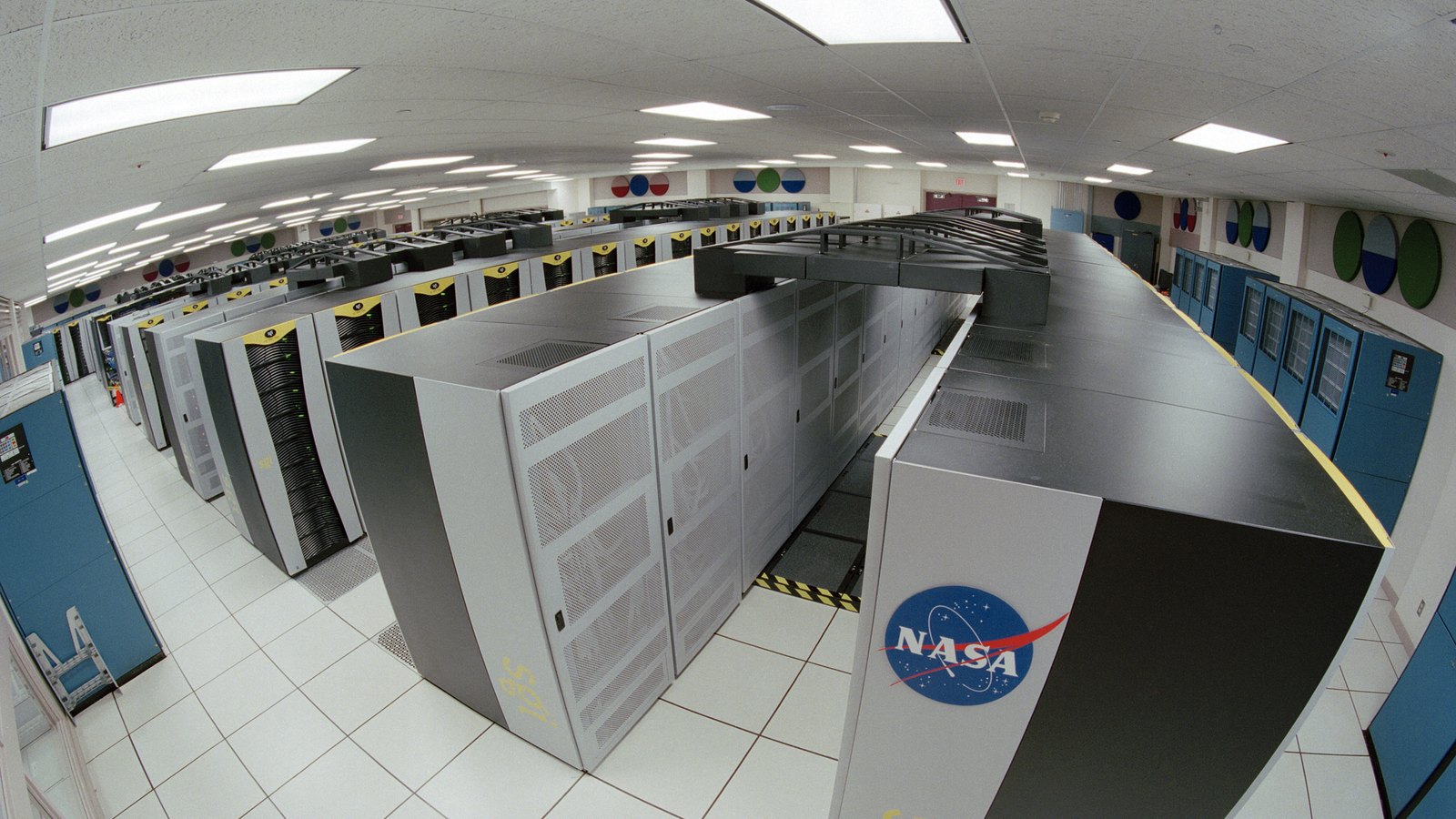
Governor Kathy Hochul broke ground on 19 November 2026 at the University at Buffalo's North Campus in Amherst on Empire AI Gamma, the permanent home of New York's shared supercomputing project for public and private universities. Gilbane is the construction manager, and the governor's office expects completion by early 2028. The state describes Empire AI as a public-private initiative of more than $500 million, first announced in Hochul's 2024 State of the State address.
Gamma follows Alpha and Beta, a $40 million UB supercomputer that became fully operational in August 2026. Empire AI board chair Tom Secunda said the project has more than 1,500 registered users and hundreds of research projects under way. He told WAMC that funders want New York to have capacity "not just for the tool, which is what this compute is, but for the researchers and for the data." Heat from the supercomputer will be recovered through a connection to UB's Baker Chilled Water Plant and used to warm university buildings. The state's description of Empire AI as the country's most powerful academic AI research computer is its own, not an independent ranking.
The new Portal North Bridge is open for service, replacing a swing bridge that opened in 1910. The $2.3 billion project took four years to build. About 200,000 rail riders cross it daily on New Jersey Transit or Amtrak trains.
The old bridge had to open for passing boats, and because of its older mechanics it often stuck in the open position, leaving passengers waiting on board. The five-week final phase of work installed 2.5 miles of track and 4,500 feet of catenary wire. The replacement is a fixed span. "This bridge will never open again," said Kris Kolluri, executive director of New Jersey Transit. The old bridge will be demolished in January.
It is one of three major infrastructure projects under way in New Jersey. The others are the Gateway Tunnel Project and a new Newark Bay Bridge, where ground was broken days ago. Governor Mikie Sherrill helped pass the funding legislation while she was in Congress.
Seven frontier labs, including OpenAI, Anthropic and xAI, accounted for 80.3% of the value of the venture rounds Nvidia joined this year, while making up 6.4% of the deals, according to PitchBook. The 27.2% share of global venture deal value counts the full size of each round, including other investors' money. The remaining deals came to roughly 120, worth $43 billion across all investors.
On Tuesday's earnings call, Nvidia interim CEO Colette Kress said the company would be "disciplined and selective" in supporting the cloud providers that rent out its chips. Jensen Huang, who personally approved startup investments according to Business Insider and The Information, resigned on Nov. 12. Board chair Harvey Jones said the board had no plans to bring him back. Kress remains CFO while the search for a permanent successor continues.
Two providers are in focus. Nscale's Nov. 12 filing says Nvidia subscribed for $1 billion and agreed to a further $1 billion scheduled to close around Nov. 16. Firmus pulled its IPO in October, and The Information reported that Nvidia was in talks to invest.
Reported by augment.market, via The VC Corner, 2026-11-22
Investor Gavin Baker says the market is setting between $1 trillion and $2 trillion of AI capital spending against less than $200 billion of frontier-lab revenue, and selling Nvidia on the result. On the Sourcery podcast he put lab revenue at about $80 billion for Anthropic and about $40 billion reported for OpenAI, with Grok, Muse and Gemini added. Nvidia is about 32% below its October record.
Baker says that sum ignores other buyers. At a conference he heard Michael Dell report selling 3,200 "AI factories" in 2024 and 2025 and about 3,300 in the last nine months, to more than 6,000 enterprises. He also heard Lin Chao of Fireworks describe 13 times growth with its top customer in the first nine or ten months of the year. Baker said there is "a little bit of a discontinuity between really strong fundamentals in the present and on the ground and what stocks are discounting."
He expects the turn once companies start guiding for 2027, and sees a buildout that could run for decades, like the railways.
Reported by BigGo Finance, via Molly O'Shea, 2026-11-19
New York Attorney General Letitia James announced on Tuesday a new unit to enforce state laws on artificial intelligence and other emerging technologies. The AI Safety, Standards, Enforcement, and Transparency Unit, known as ASSET, will sit within the Economic Justice Division and work with its Bureau of Internet and Technology. Cristy Phillips, previously special counsel for the division, will lead it.
The unit will handle AI safety, consumer privacy, cybersecurity, digital scams and online safety. It will oversee the RAISE Act, which takes effect on 1 January 2027 and requires developers of certain advanced AI models to publicly disclose their safety measures and promptly report security and safety incidents. It will also help enforce the SHIELD Act, a chatbot law barring unsafe features for children from June 2027, and a penal law covering harmful intimate images, including some AI-generated ones. The office says the unit will develop policy proposals and give technical expertise to investigations across the agency.
"Our ASSET Unit will lead the way in ensuring AI and other emerging technology are developed safely and for the benefit of all New Yorkers," James said.
Mayor Zohran Mamdani announced on Monday that the NYPD's Strategic Response Group, the unit that responds to protests, will be formally disbanded, with its core functions split between new and existing divisions. The unit was created in 2015 and has drawn numerous lawsuits and accusations of police brutality. Mamdani pledged to close it during his 2025 campaign.
Protest response will move to a new Community Dialogue and De-escalation Division in the mayor's Office of Community Safety. The Intelligence and Counterterrorism Bureau will take over counterterrorism work. The city will formalise a ban on kettling and prohibit long guns, pepper spray and tear gas during First Amendment activities.
Liz Glazer, founder of Vital City, called the steps reasonable but raised "a question mark" over how the new unit will work inside a department still defining its own mission. Police Benevolent Association President Patrick Hendry criticised the plan, while Commissioner Jessica Tisch said she endorsed it. The NYCLU wants the City Council to pass a bill mirroring the order so later administrations cannot reverse it.
Bessemer Venture Partners and Newcomer published the inaugural AI 100 on 12 November 2026, ranking what they judged to be the 100 most promising private AI companies. The list was unveiled at the Cerebral Valley AI Summit in San Francisco. Anthropic took first place, a week before its expected IPO. OpenAI is second and Databricks third, with Stripe fourth. The companies carry a collective valuation of around $3.5 trillion.
The large model companies, including Anthropic, OpenAI and Thinking Machines at #21, make up 9% of the names but 55% of that valuation. Bessemer weighed revenue, valuation and market share alongside people and culture, using company data and PitchBook. The authors expect disagreement over who was ranked too high or too low, or wrongly left out. Crosby, a legal startup, missed this year's cut.
They also describe the list as precarious. Labs without public products, such as Safe Superintelligence, and startups with very large valuations, such as Instinct, are riskier still, as are chip and robotics companies whose products take years and large sums to develop.
Anthropic published a report on 5 November 2026 covering 207,049 research sessions on Claude consumer plans, recorded between 2 August and 30 September. Of these, 128,914 came from Chat and Cowork and 78,135 from Claude Code. A language model labelled each session by field and task, and the team kept only those labels.
Data analysis accounts for about one-third of Claude sessions and nearly half of Claude Code sessions. Computer science makes up 4.3% of the world's researchers but 32.7% of Claude Code sessions. Surveyed scientists rank idea generation and data gathering as the most important tasks for discovery, yet use Claude less for them.
The authors also model scenarios for research output. Widely adopted existing capabilities could double output in some fields. If AI did all non-physical research work, computer science and statistics could see up to a 15-fold rise, against three- or fourfold in chemistry and biology. About 40% of surveyed researchers who actively use AI expect models to run full research projects on their own by 2030.
Ruben Dominguez published five go-to-market frameworks on 18 November 2026, drawing on case studies from Gong, Deel, Accord and HubSpot. His starting point is that every team, large or small, now has the same AI tools for outreach, while buyers are buried in messages. Most founders respond by sending more, which he calls a losing game. He argues that focus is what wins.
The frameworks cover publishing useful content, making a purchase easier to complete than to postpone, keeping the approver informed, structuring sales pay and revisiting old leads. One Gong user said that by the time a salesperson contacted her, she was already sold, after the company's LinkedIn content had built her trust. Chris Lee of Deel, which the piece says he has scaled to more than $1.5B in revenue, uses the phrase "sales experience problem" for the work buyers face after a demo. Ross Rich of Accord says CROs will always delegate, so seeking a meeting with them is mostly pointless. Mark Roberge of HubSpot reports a 70% churn reduction over six months after the company rewarded reps whose customers stayed.
"Open source demand", that for me was the most honest take on AI for some time (AI capex article).
Its an acknowledgement that AI is likely to become far more than just the bigger players, arguably becoming more akin to the move from on premise servers to cloud, with similar pricing models for compute not models?
One thing is for sure the moat for the front runners is shrinking.